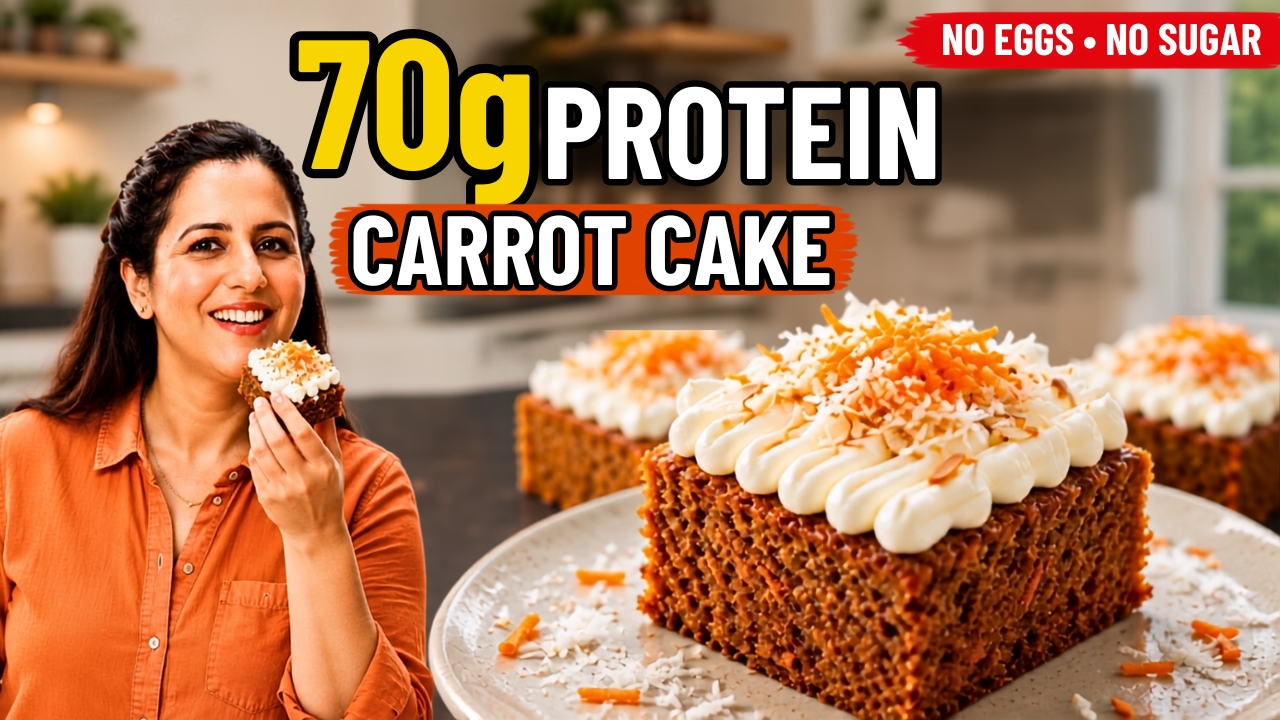
High Protein Carrot Cake (No Protein Powder, No Refined Sugar)
If you’ve ever tried a “healthy” carrot cake and ended up with something dense, chalky, or weirdly protein-powder-flavored, this one is going to feel like a relief. This high protein carrot cake tastes like actual carrot cake — warm cinnamon, sweet grated carrot, a tangy cream-cheese-style frosting — but there’s no protein powder anywhere in it, no refined sugar, and no eggs. The protein comes from real food: oat flour, Greek yogurt, and a generous layer of yogurt frosting. The whole cake lands at around 70g of protein, which works out to roughly 12g per slice.
It’s the kind of dessert you can slice for an afternoon snack and not feel like you’ve derailed your day.
Quick Recipe Overview
- Prep time: 15 minutes
- Cook time: 45 minutes (steamed) or 30–35 minutes (baked)
- Chill time: 20 minutes
- Total time: about 1 hour 20 minutes
- Servings: 6 slices
- Yield: one 7-inch cake
- Calories: ~250 per slice
- Protein: ~12g per slice (~70g per whole cake)
- Dietary: high protein, no refined sugar, egg-free, no protein powder, vegetarian
Why You’ll Love This Recipe
- Real high protein — about 12g per slice and ~70g in the whole cake, all from food, not powder.
- No protein powder — so no chalky aftertaste and no gritty crumb.
- No refined sugar — sweetened with monk fruit, so it’s lower in added sugar.
- Egg-free — the batter binds with Greek yogurt, oat flour, and carrot moisture.
- No oven required — steam it on the stovetop, or bake it if you prefer.
- Tastes like the real thing — warm spices, moist crumb, tangy frosting.
Ingredients
For the cake:
- 2 cups grated carrot (packed, ~220g) — the moisture backbone of the cake. Grate it fine so it melts into the crumb.
- 1½ cups oat flour (~150g) — your main structure and a big part of the protein and fiber. Use certified gluten-free oats/oat flour if you need it gluten-free. You can make your own by blitzing rolled oats.
- ½ cup thick Greek yogurt (~120g) — the egg replacer and a protein driver. Use a thick, plain, nonfat or low-fat Greek yogurt; avoid thin, runny yogurts or the batter won’t set.
- ½ cup milk (~120ml) — loosens the batter. Any milk works, including unsweetened plant milk.
- 3 tbsp neutral oil — keeps the crumb tender and moist. (This is the version you filmed; see Variations for a higher-protein nut-butter swap.)
- 3 tbsp monk fruit sweetener — refined-sugar-free sweetness. A monk fruit/erythritol blend measures cup-for-cup like sugar.
- 1 tsp vanilla extract
- 1½ tsp baking powder and ½ tsp baking soda — your lift.
- 1½ tsp cinnamon, ½ tsp nutmeg, ¼ tsp salt — the classic carrot cake warmth.
- ¼ cup chopped walnuts (~30g) — texture, plus a little extra protein and fiber. Pecans work too.
For the frosting:
- ¾ cup thick Greek yogurt (~200g) — the cream-cheese-style tang, and a big protein boost.
- 2 tbsp monk fruit sweetener
Equipment
- 7-inch round cake tin
- Large pot with a lid and a trivet (for steaming) or an oven
- Parchment paper and foil
- Box grater or food processor
- Mixing bowls
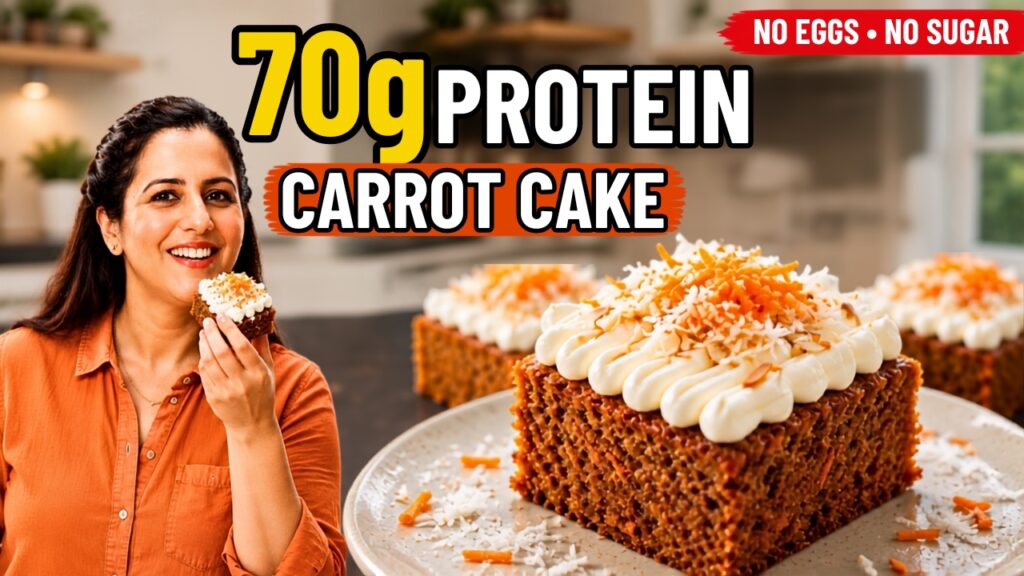
How to Make High Protein Carrot Cake
- Mix the wet ingredients and carrots. In a large bowl, whisk the Greek yogurt, milk, oil, monk fruit, and vanilla until smooth. Stir in the grated carrot until fully coated. It should look like a loose, wet carrot mixture.
- Combine the dry ingredients. In a separate bowl, stir together the oat flour, baking powder, baking soda, cinnamon, nutmeg, and salt.
- Fold together and rest. Add the dry mix to the wet and fold until just combined — stop as soon as the dry streaks disappear. Fold in the walnuts. Now let the batter rest for 10 minutes. This is the most important step in an egg-free cake: the oat flour absorbs the moisture and thickens into a scoopable batter, which is what gives you structure without eggs. If it looks too stiff to spread after resting, loosen with 1–2 tablespoons more milk.
- Fill the tin. Line a 7-inch tin with parchment, spoon in the batter, and level the top. Cover the tin tightly with foil so no condensation drips in.
- Steam (or bake). Set the tin on a trivet in a large pot with about 1½ inches of simmering water. Cover and steam on medium for about 45 minutes, until a skewer comes out clean. Prefer the oven? Bake at 350°F (175°C) for 30–35 minutes.
- Cool completely. Lift the cake out and let it cool fully in the tin. It firms up as it cools, so don’t rush this — a warm egg-free cake is fragile.
- Frost and set. Stir the frosting yogurt with monk fruit until smooth, spread it over the cooled cake, and top with a few extra walnuts. Chill for 20 minutes so the frosting sets, then slice.
Tips for the Best High Protein Carrot Cake
- Use thick yogurt, not thin. Runny yogurt is the number one reason an egg-free cake doesn’t set. Strained/Greek-style is essential.
- Don’t skip the batter rest. Those 10 minutes are what replace the egg. Skip it and the crumb turns gummy.
- Grate the carrots fine. Coarse shreds stay chewy and hold too much water in pockets.
- Cool before frosting. Yogurt frosting will slide right off a warm cake.
- Taste your batter for sweetness. Monk fruit brands vary in intensity — adjust before it goes in the tin.
Common Mistakes
- Cake is gummy in the middle → too little rest or too much moisture → let the batter rest the full 10 minutes and make sure your yogurt is thick, not runny.
- Cake didn’t rise → old baking powder/soda, or overmixing → use fresh leaveners and fold just until combined.
- Frosting is watery → yogurt wasn’t strained enough → strain it in cheesecloth for 2–3 hours for a firmer, cream-cheese-style frosting.
- Crumbly slices → cut while warm → cool fully and chill before slicing.
Substitutions
- Oat flour → almond flour (partial): Swapping up to ⅓ cup of the oat flour for almond flour makes it richer and adds protein, but keep most of it oat flour for structure. Recommended in small amounts.
- Oil → natural peanut or almond butter (¼ cup): This is the higher-protein version — it pushes the cake to ~85g protein total. Slightly denser crumb. Recommended if protein is your top priority.
- Monk fruit → any granulated sweetener you prefer: Adjust to taste; this affects sweetness only.
- Walnuts → pecans, or omit for nut-free: Straightforward swap.
- Milk → unsweetened plant milk: Works fine; no texture change.
Variations
- Higher-protein version: Use ¼ cup peanut butter in place of the oil (see substitutions) for ~85g protein per cake.
- Chocolate chip carrot cake: Fold in a handful of sugar-free chocolate chips.
- Pineapple carrot cake: Add ¼ cup crushed, well-drained pineapple (reduce milk slightly).
- Cupcakes: Steam or bake in lined cups; reduce cook time to ~20 minutes.
- Dairy-free: Use a thick coconut or almond yogurt for both the batter and frosting.
Storage
- Refrigerator: Store frosted cake in an airtight container for up to 4 days. Because the frosting is yogurt-based, this cake lives in the fridge, not on the counter.
- Freezer: Freeze unfrosted slices, well wrapped, for up to 2 months. Thaw in the fridge overnight and frost fresh.
- Texture note: The crumb is at its best on days 1–2; it stays moist but grows slightly denser as the week goes on.
Make-Ahead / Meal Prep
You can bake or steam the cake a day ahead, cool it, wrap it, and refrigerate unfrosted — then frost the day you serve it. Sliced and portioned, it makes an easy high-protein snack to grab through the week.
Serving Suggestions
Serve chilled with a coffee for an afternoon protein snack, add a dollop of extra Greek yogurt and a dusting of cinnamon for dessert, or plate it with fresh berries. It’s sturdy enough to pack into a lunchbox.
Nutrition Information
Per slice (based on 6 slices):
| Nutrient | Amount |
|---|---|
| Calories | ~250 |
| Protein | ~12g |
| Carbohydrates | ~29g |
| Total fat | ~11g |
| Saturated fat | ~1.5g |
| Fiber | ~3.4g |
| Sugar | ~6g (naturally occurring, from carrot & dairy) |
| Added sugar | 0g |
| Sodium | ~230mg |
Nutrition information is an estimate and may vary depending on the brands and ingredients used.
Nutrition Value Explanation
The protein here comes from real food — oat flour, the Greek yogurt in the batter, and the generous yogurt frosting — which is why it reaches about 70g across the whole cake without any protein powder. Fiber comes mainly from the oat flour, carrots, and walnuts. There’s no added sugar; the small amount of sugar listed is naturally occurring from the carrots and dairy, since the cake is sweetened with monk fruit.
Frequently Asked Questions
How much protein is in this carrot cake? About 12g per slice, or roughly 70g in the whole cake, depending on your yogurt and milk brands.
Is there protein powder in this recipe? No. All the protein comes from oat flour and Greek yogurt, so there’s no chalky aftertaste.
Is this carrot cake egg-free? Yes. The batter binds using Greek yogurt, hydrated oat flour, and the moisture from the carrots. Letting the batter rest is what makes this work.
Can I make it without an oven? Yes — this recipe is written to be steamed on the stovetop. There’s also a baking option at 350°F (175°C) for 30–35 minutes.
Is it gluten-free? It can be. Use certified gluten-free oat flour, since oats are often cross-contaminated with wheat.
Can I use regular yogurt instead of Greek? It’s not recommended. Thin yogurt adds too much water and the cake may not set. Strained/Greek yogurt is important.
How do I make the frosting firmer? Strain the Greek yogurt in cheesecloth for 2–3 hours before mixing. It thickens to a cream-cheese-like consistency.
Can I make it less sweet or sweeter? Yes — monk fruit brands vary, so taste the batter and adjust before baking.
How should I store it? In the fridge, in an airtight container, for up to 4 days. The yogurt frosting means it can’t sit at room temperature.
Can I freeze it? Freeze unfrosted slices for up to 2 months, then thaw overnight and frost fresh.
How do I boost the protein even higher? Swap the oil for ¼ cup peanut or almond butter — that pushes the whole cake to around 85g of protein.
Final Thoughts
This is the carrot cake I reach for when I want something that feels like a treat but still fits a higher-protein, lower-sugar day. It’s moist, warmly spiced, egg-free, and it genuinely tastes like carrot cake — no protein powder required. If you make it, I’d love for you to try the steamed method at least once; it keeps everything wonderfully tender.
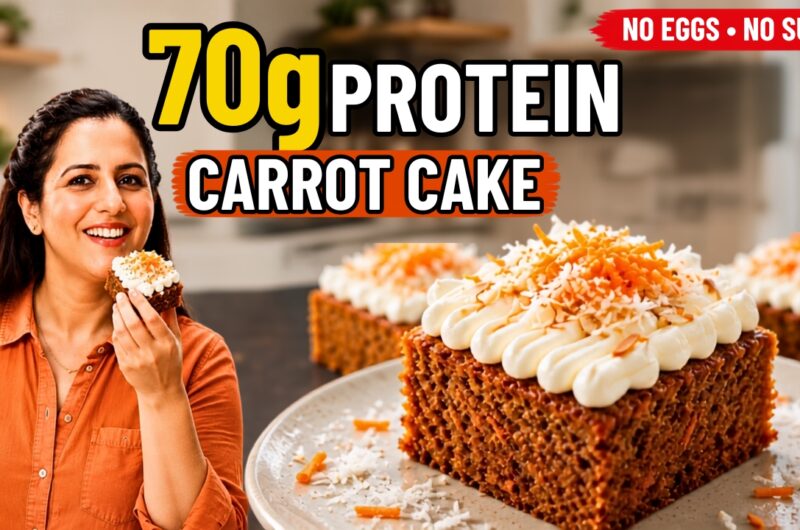
High Protein Carrot Cake
Course: DessertCuisine: AmericanDifficulty: Medium6
servings15
minutes45
minutes1
hour20
minutesMoist, egg-free high protein carrot cake with no protein powder and no refined sugar. Made with oat flour and a Greek yogurt frosting — about 70g protein per cake
Ingredients
Ingredients:
2 cups grated carrot, packed (~220g)
1½ cups oat flour (~150g)
½ cup thick Greek yogurt (~120g)
½ cup milk (~120ml)
3 tbsp neutral oil
3 tbsp monk fruit sweetener
1 tsp vanilla extract
1½ tsp baking powder
½ tsp baking soda
1½ tsp cinnamon
½ tsp nutmeg
¼ tsp salt
¼ cup chopped walnuts (~30g)
Frosting: ¾ cup thick Greek yogurt (~200g) + 2 tbsp monk fruit sweetener
Directions
- Whisk yogurt, milk, oil, monk fruit, and vanilla; stir in grated carrot.
- Combine oat flour, baking powder, baking soda, cinnamon, nutmeg, salt.
- Fold dry into wet until just combined; fold in walnuts; rest batter 10 minutes.
- Spoon into a lined 7-inch tin, level, and cover tightly with foil.
- Steam on a trivet over 1½ inches simmering water ~45 min (or bake at 350°F/175°C for 30–35 min) until a skewer comes out clean.
- Cool completely in the tin.
- Mix frosting yogurt with monk fruit, spread over cooled cake, top with walnuts, chill 20 minutes, and slice.
Recipe Video
Notes
- Use thick Greek yogurt (not thin) so the egg-free batter sets. Don't skip the 10-minute rest. For a firmer frosting, strain the yogurt 2–3 hours first. For ~85g protein per cake, swap the oil for ¼ cup peanut butter.
- Storage: Fridge, airtight, up to 4 days. Freeze unfrosted slices up to 2 months. Calories: ~250 Protein: ~12g Carbohydrates: ~29g Fat: ~11g Saturated Fat: ~1.5g Fiber: ~3.4g Sugar: ~6g Sodium: ~230mg