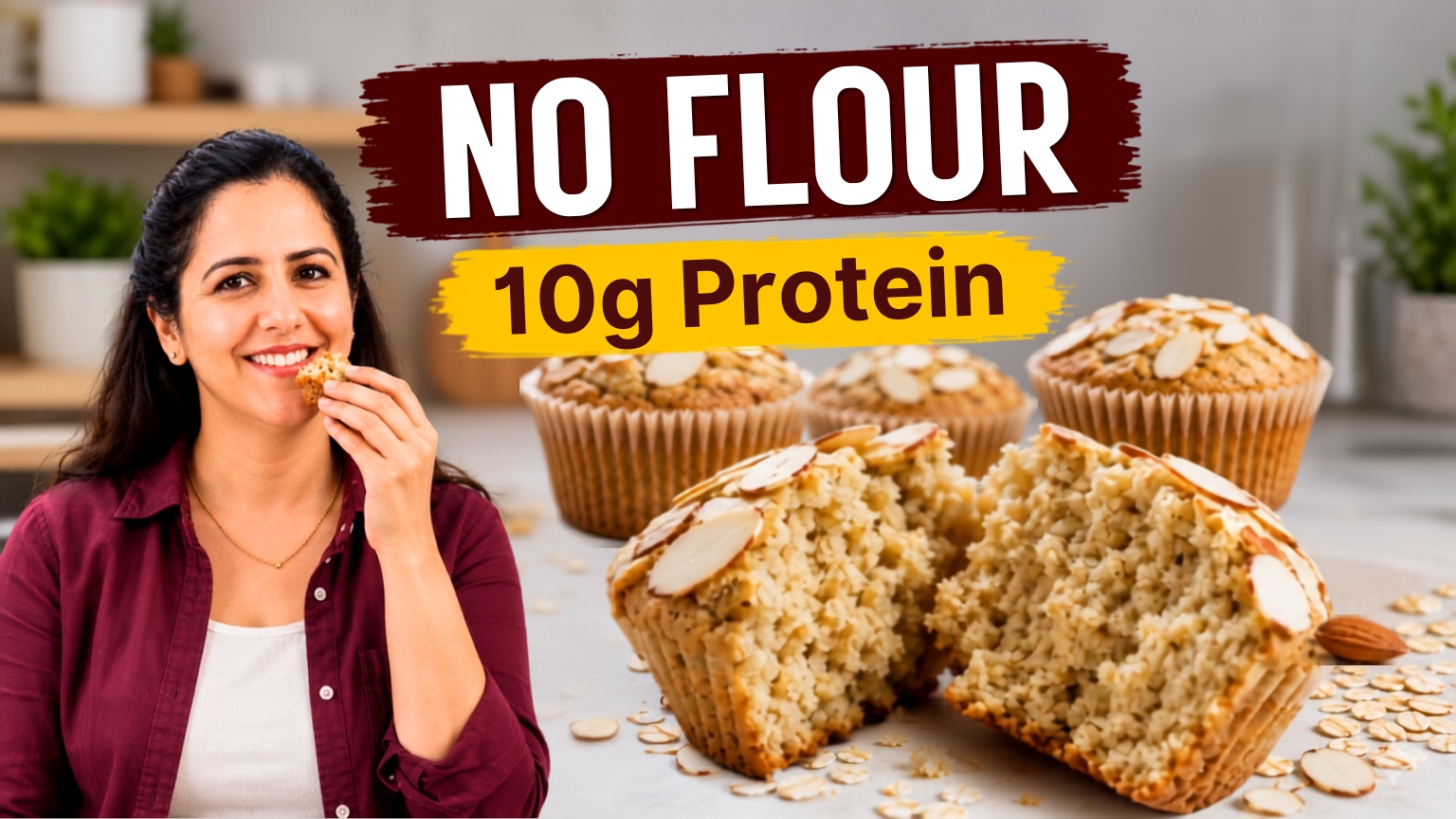
Eggless High-Protein Almond Flour Muffins (No Protein Powder)
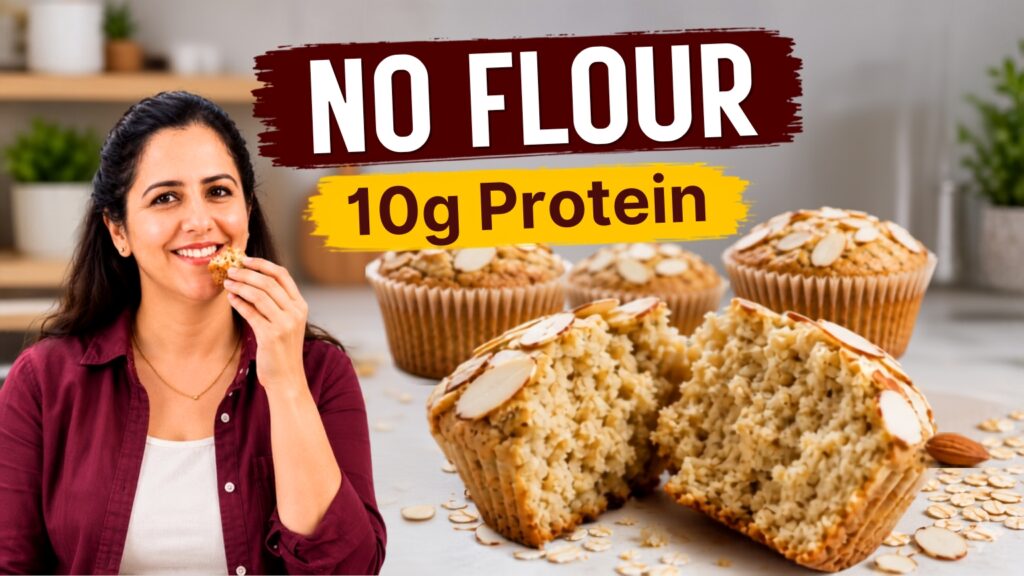
These gluten free protein muffins are soft, moist, and made without eggs or protein powder — with real protein from almond flour and Greek yogurt, and no refined sugar. The protein comes from real food — almond flour and Greek yogurt — so you get a tender, satisfying muffin that happens to be gluten-free and made with no refined sugar. If you’ve been let down by dry, chalky protein muffins before, this is the fix.
I bake eggless and better-for-you recipes every week on Bake with Neetu, and muffins are where most healthy recipes go wrong: too dry, too dense, or too dependent on powder. This version leans on almond flour for moisture and Greek yogurt for lift and protein, with a touch of orange to keep it bright.
Quick Recipe Overview
- Prep time: 10 minutes
- Cook time: 18–22 minutes
- Total time: ~30 minutes
- Servings: 12 muffins
- Calories: ~215 per muffin (estimate)
- Protein: ~7–8 g per muffin (estimate)
- Dietary: Eggless · Gluten-free · No refined sugar · Vegetarian · No protein powder
Why You’ll Love This Recipe
- Real protein, no powder — almond flour and Greek yogurt do the work, so there’s no chalky aftertaste.
- Completely eggless — no eggs needed; the yogurt and leavening handle structure and rise.
- Naturally gluten-free — almond flour and a little cornstarch, no wheat.
- No refined sugar — sweetened with monk fruit sugar (or honey/maple if you prefer).
- One bowl of wet, one bowl of dry — genuinely beginner-friendly.
- Meal-prep friendly — they keep well and freeze beautifully.
- No-oven option — steam or air-fry them (see the recipe notes).
Ingredients
- Almond flour (250 g / 2½ cups) — the base and main protein/moisture source. Use finely ground blanched almond flour, not almond meal, for a softer crumb.
- Cornstarch or arrowroot (40 g / ⅓ cup) — gives structure and a lighter texture that the eggs would normally provide. Keeps it gluten-free.
- Greek yogurt (250 g / 1 cup) — adds protein and moisture and helps the muffins rise. Thick, full-fat or 2% works best; avoid thin/runny yogurt.
- Monk fruit sugar (100 g / ½ cup) — a 1:1 granulated monk fruit blend (like Lakanto) keeps these free of refined sugar. Honey or maple syrup also work (see substitutions).
- Milk (about ½ cup / 120 ml) — needed to loosen the batter when using a dry sweetener like monk fruit. Any milk works.
- Neutral oil or melted butter (60 ml / ¼ cup) — for richness and a tender crumb.
- 1 orange, zested and juiced — brightens the flavor; optional but recommended.
- Vanilla extract (1 tsp)
- Baking powder (1½ tsp) and baking soda (½ tsp) — your lift. Confirm the baking powder is certified gluten-free.
- Salt (¼ tsp) — balances sweetness.
- Sliced almonds (30 g) — optional topping for crunch and a bakery look.
Equipment
- 12-cup muffin tin + paper liners
- Two mixing bowls
- Whisk and spatula
- Zester or fine grater
How to Make Gluten Free Protein Muffins
- Preheat to 350°F (175°C) and line a 12-cup muffin tin. (No oven? See notes for the air-fryer/steaming method.)
- Mix the wet ingredients. Whisk the Greek yogurt, monk fruit sugar, oil, vanilla, and the orange zest and juice until smooth.
- Mix the dry ingredients. In a second bowl, stir the almond flour, cornstarch, baking powder, baking soda, and salt, breaking up any almond-flour lumps.
- Combine. Fold the dry into the wet until just combined. Add milk a little at a time until the batter is thick but scoopable — not stiff, not runny. Don’t overmix.
- Fill. Divide between the 12 liners, about ¾ full. Scatter sliced almonds on top.
- Bake 18–22 minutes, until golden and a toothpick comes out clean. Monk fruit doesn’t brown like sugar, so judge by the toothpick, not color.
- Cool in the tin 10 minutes, then move to a rack. Almond flour muffins are fragile while warm — let them set before you bite in.
Tips for the Best Gluten Free Protein Muffins
- Don’t overmix — almond flour batters get gummy if beaten. Fold just until combined.
- Watch the moisture — monk fruit is dry, so the extra milk matters. Aim for a thick, scoopable batter.
- Use the toothpick, not the color — no-refined-sugar muffins stay paler than regular ones.
- Room-temperature yogurt blends more smoothly and bakes more evenly.
- Cool fully before storing — trapped steam makes them soggy.
Common Mistakes
- Muffins too dense → Why: overmixed or too little leavening. → Fix: fold gently, and check your baking powder is fresh.
- Muffins too wet in the middle → Why: batter was too loose or underbaked. → Fix: add milk sparingly; bake until the toothpick is clean.
- Muffins fell apart warm → Why: almond flour muffins are fragile hot. → Fix: cool 10 minutes in the tin before moving.
- Bitter aftertaste → Why: some monk fruit blends have a cooling note. → Fix: use an erythritol–monk fruit blend, which behaves most like sugar.
Substitutions
- Monk fruit sugar → honey or maple syrup (½ cup): works well; reduce the added milk since these are liquid.
- Greek yogurt → dairy-free thick yogurt: makes it dairy-free; texture stays close.
- Almond flour → no true swap: it’s the base and the protein; other flours change the recipe entirely.
- Cornstarch → arrowroot (1:1): direct swap.
- Orange → lemon or omit: flavor variation only.
Variations
- Chocolate chip: fold in ⅓ cup sugar-free chocolate chips.
- Blueberry: fold in ¾ cup fresh or frozen (don’t thaw).
- Higher protein: stir in 2 tbsp hemp seeds or use full-fat Greek yogurt.
- Nut-topped: walnuts or pistachios instead of sliced almonds.
Storage
- Refrigerator: airtight, up to 5 days. Almond flour muffins keep best chilled.
- Freezer: wrap individually, up to 2 months.
- Thaw: overnight in the fridge or 20 seconds in the microwave.
Make-Ahead / Meal Prep
Bake a batch on the weekend, refrigerate, and grab one for a high-protein breakfast or snack through the week. They travel well and don’t need reheating.
Serving Suggestions
Enjoy with Greek yogurt and berries for an extra protein hit, a spread of nut butter, or alongside coffee. They’re sturdy enough for lunchboxes.
Nutrition Information (per muffin — estimate)
| Nutrient | Amount |
|---|---|
| Calories | ~215 |
| Protein | ~7–8 g |
| Carbohydrates | ~14–16 g |
| Total fat | ~15 g |
| Saturated fat | ~2 g |
| Fiber | ~3 g |
| Sugar | ~4–5 g (no added refined sugar) |
| Sodium | ~120 mg |
Nutrition information is an estimate and may vary depending on the brands and ingredients used. Values assume monk fruit sugar (near-zero calorie) and 2% Greek yogurt. If you use honey/maple, sugar and calories rise.
Nutrition Value Explanation
The protein comes from whole foods — almond flour and Greek yogurt — not powder. Almond flour also contributes fiber and healthy fats, while using monk fruit sugar means there’s no added refined sugar. The result is a muffin with a better protein-to-calorie ratio than most bakery muffins.
FAQ
Are these muffins gluten-free? Yes — they use almond flour and cornstarch. Confirm your baking powder is certified gluten-free.
Are they really eggless? Yes. Greek yogurt plus baking powder and soda give structure and rise, so no eggs are needed.
Can I make them without protein powder? They’re designed that way — all the protein is from almond flour and Greek yogurt.
How much protein per muffin? Roughly 7–8 g, depending on your yogurt and brands.
Can I use honey instead of monk fruit? Yes — use ½ cup and cut back the added milk, since honey is liquid.
Why are my muffins pale? Monk fruit doesn’t brown like sugar. Use the toothpick test for doneness.
Can I make these without an oven? Yes — air-fry at 320°F (160°C) for about 12–15 minutes, or steam in a covered pot. Check with a toothpick.
Can I freeze them? Yes, up to 2 months wrapped individually.
Why did mine turn out dense? Usually overmixing or old leavening. Fold gently and use fresh baking powder.
Can I make them less sweet? Reduce the monk fruit sugar by a couple tablespoons; the texture won’t change much.
Are these keto? They’re lower in carbs and sugar, but not strictly keto — the sweetener and almond flour still contribute carbs.
Final Thoughts
If you’ve been searching for a protein muffin that isn’t dry, chalky, or dependent on powder and eggs, this is the one to bookmark. It’s simple, forgiving, and genuinely good for you.
Eggless High-Protein Almond Flour Muffins
Course: Breakfast, SnacksCuisine: AmericanDifficulty: Easy12
servings10
minutes20
minutes300
kcalSoft, gluten-free protein muffins made without eggs or protein powder — almond flour and Greek yogurt do the work, with no refined sugar.
Ingredients
2½ cups (250 g) almond flour
⅓ cup (40 g) cornstarch or arrowroot
1 cup (250 g) Greek yogurt
½ cup (100 g) monk fruit sugar
About ½ cup (120 ml) milk
¼ cup (60 ml) neutral oil or melted butter
1 orange, zested and juiced
1 tsp vanilla extract
1½ tsp baking powder
½ tsp baking soda
¼ tsp salt
30 g sliced almonds
Directions
- Preheat to 350°F (175°C) and line a 12-cup muffin tin.
- Whisk Greek yogurt, monk fruit sugar, oil, vanilla, and orange zest and juice until smooth.
- In a second bowl, stir almond flour, cornstarch, baking powder, baking soda, and salt.
- Fold dry into wet; add milk until the batter is thick but scoopable. Don't overmix.
- Divide into 12 liners (¾ full) and top with sliced almonds.
- Bake 18–22 minutes, until a toothpick comes out clean.
- Cool 10 minutes in the tin, then transfer to a rack.
Recipe Video
Notes
- No-oven option — air-fry at 320°F (160°C) for ~12–15 min or steam ~20 min. Swap monk fruit for honey/maple (½ cup) and reduce added milk. Cool before storing.
- Storage: Fridge up to 5 days; freezer up to 2 months.
Nutrition (per muffin — estimate): Calories ~215 · Protein ~7–8 g · Carbohydrates ~15 g · Fat ~15 g · Saturated Fat ~2 g · Fiber ~3 g · Sugar ~4–5 g · Sodium ~120 mg